
Introduction
In modern construction, concrete block moulding machines are essential. They create the building blocks of infrastructure development, crucial for durability. With advancing technology, the variety of options available has expanded. This guide looks at the different types of concrete block moulding machines, their uses, advantages, and considerations for purchasing. Key features of notable models like the QT4-20 block making machine will be highlighted to provide a comprehensive view for potential buyers.
Overview of Concrete Block Moulding Machines
Concrete block moulding machines are vital in the construction industry, producing various concrete blocks such as bricks, pavers, and hollow blocks. These machines vary in automation, size, and output capacity to meet different production needs and budgets.
Importance of Choosing the Right Equipment
Selecting the right block moulding machine is crucial for optimizing production efficiency and ensuring high-quality end products. The right equipment can significantly reduce labor costs, increase production speed, and produce high-quality blocks that meet industry standards. Whether investing in a QT4-20 block making machine for high-quality outputs or a basic model for small-scale use, understanding the various machines available is essential.
Manual Concrete Block Moulding Machines
- Characteristics and Basic Operation: Manual machines are designed for simplicity and ease of use, operated by hand, and ideal for small-scale production. They consist of a framework with a mold filled with a concrete mixture manually.
- Advantages and Disadvantages for Small-Scale Use: The main advantage of manual machines is their low cost and ease of maintenance, making them accessible for small businesses. However, they are labor-intensive and slower compared to automated machines.
Semi-automatic Concrete Block Moulding Machines
- Integration of Manual and Automated Processes: Semi-automatic machines combine manual and automated processes, balancing productivity and cost by automating critical steps like vibration and pressing.
- Benefits in Productivity and Product Quality: These machines enhance production speed and consistency while keeping costs manageable, suitable for medium-scale productions.
Fully Automatic Concrete Block Moulding Machines
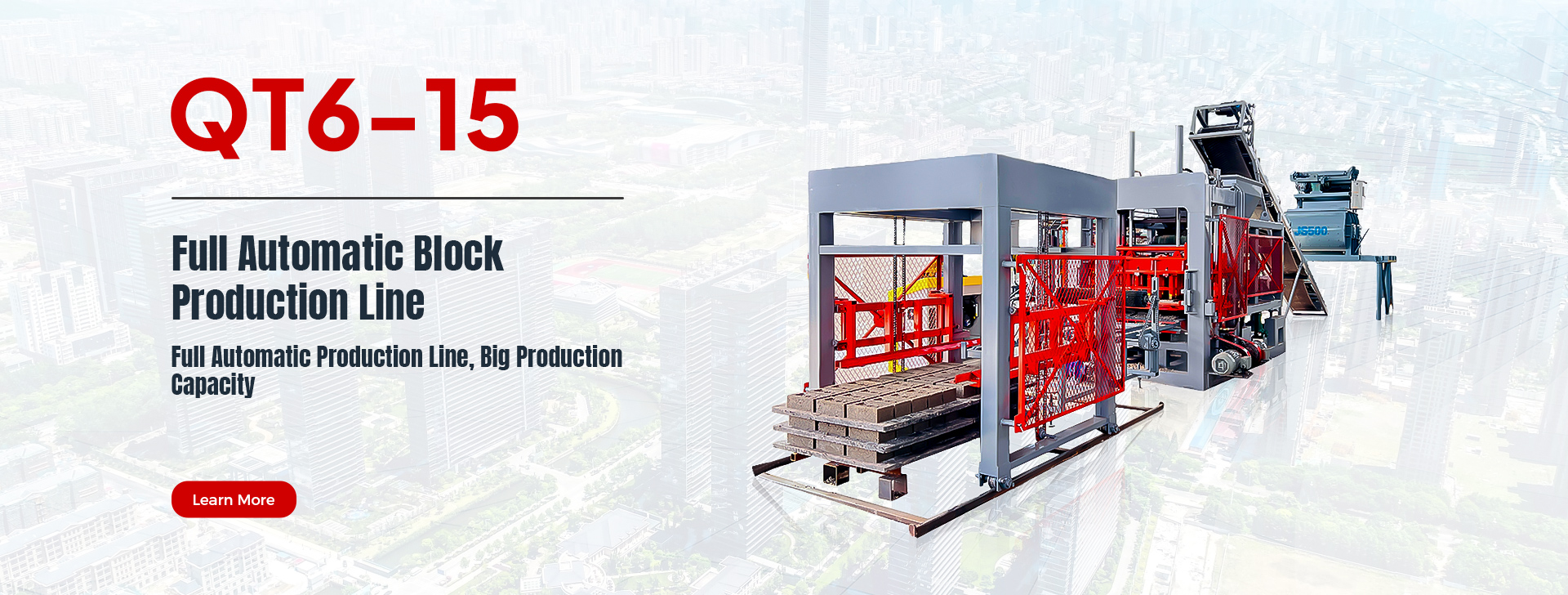
- Features and Capabilities: Fully automatic machines automate all stages of block production, from mixing to palletizing.
- Efficiency, Production Speed, and Quality Benefits: Automation leads to unmatched production speeds and consistency. Fully automatic machines like the QT4-20 block making machine are ideal for large-scale operations demanding high-volume outputs without compromising quality.
Vibratory Concrete Block Moulding Machines
- Use of Vibratory Technology: Vibratory machines use vibration to ensure even distribution and compactness of the concrete mix within the mold, producing high-density blocks.
- Strengths in Product Durability and Diversity: Blocks from vibratory machines are known for strength and durability, suitable for load-bearing structures and versatile in block designs.
Hydraulic Concrete Block Moulding Machines
- Hydraulic Systems: Hydraulic machines use pressure to enhance block forming, producing high-strength blocks for heavy-duty construction applications.
- Suitability for High-Strength Block Production: Hydraulic pressure ensures consistent block quality vital for structural integrity, exemplified by machines like the QT4-20.
Mobile Concrete Block Moulding Machines
- Design for On-Site Production: Mobile machines allow on-site block production, reducing logistical challenges and transportation costs.
- Benefits in Reducing Transport Costs: By producing blocks at construction sites, mobile machines minimize heavy material transport, reducing project costs and boosting efficiency.
Comparative Analysis of Moulding Machine Types
- Summary of Advantages and Limitations: Key considerations include production capacity, cost, and automation level. Manual machines offer affordability, semi-automatic machines balance efficiency and cost, while fully automatic machines provide high productivity at a premium cost.
- Assessment of Cost, Efficiency, and Technical Needs: The choice of machine should be guided by production needs and budget. Fully automatic models like the QT4-20, despite higher initial costs, justify investment for large operations through efficiency and capabilities.
Factors to Consider When Choosing a Moulding Machine
- Balancing Production Scale, Budget, and Product Needs: Evaluate production goals and financial capabilities, considering demand, equipment space, and product requirements.
- Evaluating Start-Up Time and Requirements: Installation ease, staff training requirements, and maintenance are crucial factors. Machines offering swift start-up and minimal complexities enhance productivity.
Future Trends in Concrete Block Moulding Technology
- Innovations and Advancements: Future technology is expected to enhance automation and integration with smart technologies, improving production process control and sustainability.
- Potential Impacts on Efficiency and Quality: Technological advancements promise increased production efficiency, reduced waste, and improved block quality, incorporating eco-friendly materials and processes.
Conclusion
Concrete block moulding machines are integral to construction, bridging raw material and finished structures. From manual to fully automatic machines like the QT4-20, options suit every production scale and budget. Understanding each type allows informed decisions aligning with operational goals.
Aichen: Pioneers in Concrete Block Moulding Technology
Changsha Aichen, a leader since 1999, specializes in concrete block moulding machines, offering a range of high-quality equipment. Incorporating global technology and standards, Aichen ensures durable concrete products for diverse construction needs.
Post time: 2025-09-03 19:03:35